
 24 August, 2026 17:00:33 IST
The CSIR-Indian Institute of Toxicology Research (CSIR‑IITR), Lucknow, has developed a rapid analytical method capable of detecting and quantifying 45 per‑ and poly-fluoroalkyl substances (PFAS) in under 10 minutes.
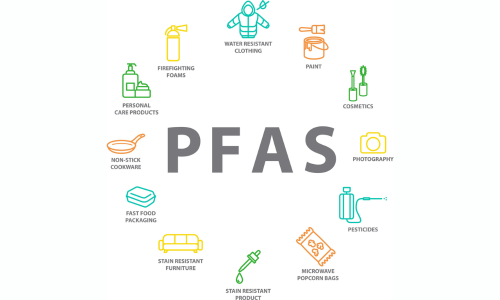
PFAS – widely used in non‑stick cookware, food packaging, cosmetics, textiles, paints and firefighting foams – have emerged as a major global health concern due to their persistence in the environment and links to cancer, immune suppression and other long‑term health risks. CSIR-IITR researchers noted that India is at an early stage of PFAS regulation, largely due to the absence of comprehensive occurrence data.
To address this gap, CSIR-IITR has set up a state‑of‑the‑art PFAS testing facility and partnered with Waters Corporation to develop a high‑sensitivity detection protocol using triple quadrupole LC‑MS/MS systems. The method can identify contaminants at parts‑per‑trillion (ppt) levels, making it among the most sensitive PFAS detection technologies currently available in the country. The institute plans international validation of the protocol and intends to publish it jointly with Waters Corporation to enable global adoption.
New water‑purification material
CSIR-IITR scientists have also developed a nanocomposite material capable of removing multiple PFAS compounds from drinking water. The technology, trademarked ‘POP FAS‑guard’, is being prepared for transfer to a Bengaluru‑based company.
CSIR-IITR is leading several national and international PFAS‑monitoring projects, including a major initiative with the United Nations Environment Programme (UNEP) to quantify PFAS in consumer products and estimate India’s production, import, export and consumption of PFAS‑containing materials.